Showing posts with label online shopping. Show all posts

Monday, July 27, 2015

ONLINE SHOPPING IN UAE


Six Quick Facts Of Online Shopping In UAE

 36% of People are accessing the internet to shop.
45% of People are making purchase on every three months.
 82% of People are satisfied with their Online Shopping experience.


online shopping in uae.jpg


 70% of People say convenient payment facilities are critical when shopping online.
 91% of People use the Internet from their mobile phone (Compared to 74% over past two years).
 55% of people are saying they prefer to shop from local websites as opposed to foreign websites.

Website: www.awok.com
Post By: Ramiz Ali Khan

Tuesday, July 21, 2015

Your gadget batteries endanger planes, says Boeing

Brit pilots agree: Get gizmos' batts out of holds

Boeing has decided that lithium-ion batteries, the engine-room of the tech gadget boom, are too dangerous to haul around in bulk on cargo planes.

The company has warned operators of its aircraft not to carry bulk shipments of batteries until logistics companies design better transport packaging and shipping procedures.

America's Federal Aviation Authority agrees, and over the weekend reiterated a warning first given in March that bulk battery shipments posed a potential risk to airliners.

If a battery develops a short circuit, the FAA explained, the build-up of hydrogen and other gases as surrounding batteries are also heated can defeat a plane's halon fire suppression system.

In May, the FAA gave this presentation to an airline fire protection meeting in Germany, explaining tests both on individual batteries and a bulk shipment.

FAA Battery Fire Test

FAA Battery Fire Test
Halon can't handle it: the FAA's battery fire test
It concluded that the total failure energy of Li-ion batteries is almost twice as much electrochemical energy as they can deliver.

A number of airlines were ahead of Boeing's announcement, with the Wall Street Journal listing Delta, British Airways, Cathay Pacific, Singapore Airlines and Air France as no longer carrying bulk shipments in the cargo holds of passenger flights.

While the FAA can warn operators of the dangers of Li-ion batteries, a law passed in 2012 means it can't regulate battery transport unless international regulators act first.

A week ago, the British Airline Pilots Association (BALPA) issued a separate statement calling for all passengers' Li-ion-powered gadgets to be carried as cabin luggage.

BALPA also wants regulators to specifically ban the batteries being carried in cargo holds

Source:awok.co/TVp4LH
Website: www.awok.com
Post By: Ramiz Ali Khan

Monday, July 20, 2015

6 best waterproof cameras

Whether you’re off surfing or scuba-diving this summer, don’t miss a good photo opp just because you’re submerged

If you’re off on some water-based adventures, invest in a camera that can cope with the wet stuff.  Most waterproof cameras are also categorized as adventure cameras, meaning that they’re engineered to cope with the rough and tumble of extreme sports, if that’s what you’re doing. Not only do these cameras take snaps when submerged in water, many of them are also kitted out with extra features like being freeze proof, dust proof, crush proof and shock and drop-proof.

As with all cameras, waterproof  camera or not, resolution will play a big factor in determining the quality of your images. If your main priority is photography, settle for no less than 14 megapixels to ensure high-clarity shots. If you’re going to be recording video, a camera with 1080px recording quality is a must-have.

The depth to which the camera is waterproof will determine the type of activity it is suitable for. A camera that can withstand 40m of depth is ideal for deep sea diving, whereas a camera with 10m of underwater depth would be better suited for snorkeling or shallow scuba diving.

We’ve looked at rugged compact, action camera and compact system camera options. Each has undergone some serious scrutiny; tested in and out of water, dropped from heights and trialled in different lighting conditions to see whether or not it makes the cut. Here’s our edit.


Fujifilm Finepix

Fujifilm Finepix XP80

Fujifilm Finepix XP80 With an image resolution of 16.4-megapixels, this is a small but mighty compact camera. It’s lightweight but captures pristine images to depths of ten meters. We found this took good images both in and out of water (though it performs best in decent light) and the easy-to-master point and shoot function makes it ideal for beginners. Plus, its small frame and shock and dust-proof features mean that kids can get behind the lens, too. It doesn’t have the photo customisation abilities of more expensive models, but it’s a good all-rounder.


Olympus Tough TG

Olympus-TG-4-GPS

Olympus-TG-4-GPS Tough is definitely the right word to describe this one. Ideal for an adventurer, it’s crushproof, shockproof and freeze-proof. But, in interests of taking great photos in water, it’s ergonomic; chunky and easy-to-grip so it shouldn’t slide out of slippery hands. It has an ultra-bright lens and built-in wifi, GPS and a clever ‘e.Compass’ allow you to share your images on the go as well as keep track of your altitude and water-depth (it’s waterproof up to 15m), while you shoot stunning 16-megapixel images.


Nikon 1 AW

Nikon 1 AW1

Nikon 1 AW1 Unlike the smaller cameras on the list, this one is a compact system camera with interchangeable lenses. This means it's bulkier than its compact competitors but it’s ideal for those who aren’t willing to compromise on picture quality. The 14.2-megapixel camera can go down to 15m, it has a pop-up flash and advanced adjustment options like the ‘Live Image Control’ function that means you can see how different effects – background softening and motion control, for example– will affect the final image. This is one for those who want to up their photography game.
Buy now


Ricoh WG-5

Ricoh WG-5

Ricoh WG-5 In its update of the much-lauded WG-4, Ricoh has created a camera that addresses all the underwater needs you didn’t even know you had. The optional underwater mode eliminates the bluish tone that can wash-out underwater photographs and its unique flash feature takes two consecutive images, one with and one without, allowing you to choose and keep the best one after the moment has been captured. It can go as deep at 14m and resist temperatures down to -10C, and captures images with a crystal-clear 16-megapixel lens. It’s not as grippy as some of the tough cameras we tried but the unusual shape allows for large, well-spaced controls that are easy to operate when submerged.


GoPro HERO4 Silver

GoPro HERO4

GoPro HERO4 If you want to capture your surroundings in near-cinematic definition video, then this one is for you. This teeny gadget packs a lot of punch and is our recommendation for all the thrill-seekers out there – it captures film in 4K resolution (aka “Ultra High Definition”), is waterproof up to a whopping 40m and lets you keep your hands free to get right into the midst of the action with a range of additional accessories like mounts and straps.


Canon PowerShot D30

Canon PowerShot D30

Canon PowerShot D30 This is an upgrade of Canon’s D20; you can use this one to depths of 25 meters, so it is ideal if you’re off on a diving adventure. With a 12.1 megapixel sensor, the images you get are decent, if not quite the quality of some of the of the higher-resolution machines. It has built-in GPS and HD video recording and is easy-to-use underwater. We’d just like to see an upgrade that includes wifi connectivity.


Verdict:
The GoPro HERO4 is hands-down the best option for capturing outstandingly high-quality video on the go, however if still images are your main format of choice then  the Nikon 1 AW1 reigns supreme. Its advanced photography options and interchangeable lenses means it will give you top-notch underwater snaps. If you can't stretch to that, and want something compact, we'd go for Ricoh's good all-rounder.

Source:awok.co/dGrwh0
Website: www.awok.com
Post By: Ramiz Ali Khan


Ramadan car hunt: Models grabbing UAE residents' attention

Cash discounts, free insurance, extended warranties on offer


Most car dealers try to wow those looking for a new set of wheels during the holy month of Ramadan. The offers include cash discounts, free insurance, extended warranties and service packages to lure customers into changing their old cars.

This urge to change/upgrade cars is not only seen in the brand new category, but also in the used car segment.

According to Dubizzle, a classifieds website in the region, several residents surf and scout for a good deal on wheels during this time of the year.


Its data shows that during Ramadan 2014, the top three searches for used car brands were BMW, Honda and Jeep; while the top three searched car models were Ford Mustang, Mercedes C63 and Honda Civic.

Toyota tops the most listed sedan cars in the country. The findings show that Toyota came first with its Camry model at an average price of Dh32,172.24 with an average mileage of 114,192km and model of the year 2008.

The second and third places went to Honda Civic 2009 and Accord 2010. Luxury cars were among the top three most searched sedan cars in the UAE. Mercedes and Porsche took the first and second place with their AMG C63 and Panamera models, while the third place went to Toyota Camry.

Among the German models in the UAE, the Mercedes-Benz S-Class took the first place, followed by Mercedes-Benz S-Class and BMW came third with its 3-Series models. For the top three most searched German models in the UAE, Mercedes-Benz C63 came first, Porsche 911 4S came second, and Mercedes-Benz G63 & S63 AMG came third.


Convertible cars were also something that people looked up on the website with the most searched being the Mini Cooper convertible, Audi A4 convertible and BMW M3 convertible.
The number one searched car throughout the year was the BMW 3-Series, followed by Land Rover’s Range Rover HSE and Jeep Wrangler.
Most people who took to Dubizzle to look for used cars performed the most searches at around 1pm and then the traffic dropped until after iftar, says the classifieds site. However, search activity went up again after iftar with a drop witnessed again during the night with the lowest search volume after imsak, around 6am.
A previous research by UAE-based online retail company, Awok.com, revealed that the hours between iftar and suhour are the most popular time to shop online in the country during this month.

Website: www.awok.com
Post By : Ramiz Ali Khan

Modern-day skiing: Drones and selfie sticks

Technology on the mountain has meant a huge increase in the number of photos and videos posted on social media.

Technology on the mountain has meant a huge increase in the number of photos and videos posted on social media.

Drones, selfie sticks and touchscreen-friendly gloves are the in-demand tech for skiers and snowboarders in New Zealand.

GoPros attached to helmets have been a common sight on the mountain for several years, but technology is making further inroads into the snow lifestyle.

This includes cellphone service all over the mountain, free wi-fi, hundreds of social media posts and the increasing number of people hunched over their phones while in the resort cafe.

The bigger ski resorts in New Zealand are no longer the rustic escapes of last century but hotbeds of technology, with places like Mt Hutt using them to do everything from making the mountain safe, stopping fraudulent use of ski passes and sharing videos on Instagram.

Mt Hutt ski area manager James McKenzie said they'd had about six requests for drones to be used on the mountain so far this year.


Snow bunnies are increasingly asking to take drones up the mountain.

He said if demand increased he would need to develop a policy to prevent any problems.

McKenzie said he hadn't seen anyone texting or talking while skiing or snowboarding, but using devices on lifts was popular.

"You see a lot of people chatting, with their phones shoved under their helmets so they keep their hands warm."

The days listening to the radio or rushing out to see the faxed ski report on the radio are long gone.

Now ski resorts uses websites and social media to tell people about conditions. If you want more information, take a look at the webcams or check other people's social accounts to get updates, photos or videos.

McKenzie said one of the most noticeable changes was inside the resort.

"There are a lot more heads down in the cafe and while you still see people talking, there's not as much as there used to be."

Chairlifts are a popular place to spend time on your phone.

Chairlifts are a popular place to spend time on your phone.

But the tech is not only for the skiers and snowboarders. Resorts are using it constantly.

"Connectivity helps us make better decisions while we operate in an aggressive environment," said McKenzie.

Mt Hutt staff use iPads to identify people as they come through the lift gates. While this is primarily to stop people misusing passes, it's also used to find people to let them know if their car lights are on or if someone is trying to locate them.

Here are some tips to get teched up for the ski season:

APPS

The first app Kiwi skiers and boarders should download is the Met Service's Snow Weather (free for Android and Apple). You choose a mountain as your "home" though you also "favourite" other resorts. It gives you forecasts, current conditions and webcams to check the situation.


The Metservice's app.

The other popular apps for mountain users are those that track and map your runs and collate stats such as maximum speed, distance travelled and vertical metres.

They are suprisingly addictive and you can get competitive with yourself in trying to beat your previous personal best. My favourite is Trace Snow (free for Android and Apple), as it has a simple interface and also stops tracking automatically once you leave the mountain. Others worth trying are Snowcru (free) and Ski Tracks ($1.29), both for Apple and Android.

Other handy apps are Apple's Find Friends (free) to help locate mates on the mountain.

CAMERAS

There are a lot of GoPros on New Zealand mountains as people record themselves and friends charging down the slopes or performing in the park.

GoPros are the fan favourite and the company has just released a smaller version, the Hero4 Session.

McKenzie said the cameras are so popular they are now selling them in the shop at Mt Hutt. He also said ski selfie sticks are used a lot on the mountain.

But GoPros aren't the only option. Sony has three models of its Action Cam, starting from $349.

If you don't want to buy a new camera you can get a case for your phone and put it on your helmet, or just hold it. Hitcase makes tough cases for iPhones that come with a range of accessories so you can mount them on just about anything. Their prices start at $100.

SOCIAL MEDIA

If you or your friends ski or board then come winter your Facebook, Twitter and Instagram feeds are probably full of snow antics.

Instagram is increasing popular in New Zealand and several mountains, including Mt Hutt, Cardrona and Rainbow have accounts. Most of those pics are for publicity but searching hashtags will show up plenty of pictures from people on the mountain.

Many resorts also are on Facebook and Twitter and they are good place to get information, or if things go bad, to complain.

WEBSITES

A fun part of skiing is improving your skills. While you can always use an instructor, technology can also help in the form of websites.

For Kiwi snowboarders, Snowboard Addiction is a great site. Started by a Kiwi who now lives in Whistler, the site features videos to help everyone from learners to those wanting to progress in the park. It has a selection of free videos but for the full package you need to pay US$59 (NZ$86)

Skiers can try the YouTube channel of Elate Media which has dozens of videos for a range of abilities.

Source: awok.co/UmhOEl
Website: www.awok.com
Post By: Ramiz Ali Khan

What Does the Future of Beauty Look Like?

Future of beauty technology

Between LED face masks that look like something out of Tron and shots that dissolve cellulite, the beauty industry has hurled itself into the futuristic world of science and technology with little hesitation. But now that we're all Snapchatting our face-washing routines and lasering our bikini lines at home, what's next? BareMinerals founder and beauty Nostradamus Leslie Blodgett recently spoke at a convention about the future of the industry, so I caught up with her to get some predictions.
What do you think is the most interesting thing happening in beauty at this moment? "There's a split in how women are and [how they] want to approach beauty. On one hand, there are a record number of cosmetic procedures happening in doctors' offices. On the other hand, there is a trend toward accepting yourself and being more self-compassionate."

How do you think women will react to changes in the industry? "I think that women will continue to embrace new technologies that are safe and effective. Think about hair dye—it was taboo when it first came on the market, and now dyeing your hair is almost expected. And I think the health and well-being movement is here to stay. Our life expectancy is only going to rise, and we want those years to be healthy and active. So looking and feeling beautiful is a nonnegotiable."

How would you like to see the beauty business change in the near future? "I would love the industry to dial up the fun and dial down the anxiety it contributes to. That would mean using realistic images and not overly retouching photos. Even a 25-year-old model has life in her face."

What types of products do you predict we'll see in the next decade? "Obviously technology is going to play a huge role in what products will be developed and in our overall health management. The Apple Watch is just the beginning. I imagine future apps will alert you when you need to apply sunscreen or tell you when your skin is dehydrated and what type of moisturizer or foundation you should use. I'm also fascinated with 23 and Me. I think beauty brands will eventually collaborate with genome scientists for even more personalization."

What's your personal dream product that's not available yet? "I don't think people realize the stress faces they make on a daily basis. It would be cool to have a special skin-care product that knows when you're crinkling your forehead or frowning and then helps the skin relax."

Do you see virtual reality playing a part in the beauty world? "Absolutely. I recently heard a Stanford professor speak about longevity and using virtual reality for acceptance of the future self. I love that idea, getting to know yourself as you age before you age. Imagine what you could look like if you cared for your body, mind, and skin."

Source: awok.co/cRORrj
Website: www.awok.com
Post By: Ramiz Ali Khan


The 10 Best Gadgets of 2015 (So Far)

The 10 Best Gadgets of 2015 (So Far)

A great gadget should be something that excels in both wow factor and actual practical use cases. Although we’re only halfway through the year, we’ve already gotten to see some really amazing consumer technology be released.

From smartphones to wearables to things that are just plain weird, here are the 10 best gadgets of 2015 so far.

10. Typo iPad Air Keyboard
TYPO1_grande.jpg
The Typo iPad Air Keyboard had a lot to prove. Not only did the product’s company come with some baggage to accept, it also has the highest price point of any iPad keyboard at $189. Fortunately, what you get with this keyboard is something that finally compares with what you get on a Surface product. The keyboard is clicky and sized well, feeling much more like a solid laptop then a junky tablet accessory. It’s expensive, but if investing some money in turning your iPad into more of a work machine, it’s worth the cost.

9. Surface 3

Screen Shot 2015-07-02 at 6.03.58 PM.png

Speaking of the Surface, Microsoft finally released a cheaper Surface product that doesn’t feel like a complete waste of time. The original Surface and Surface 2 suffered from using an ARM processor that kept it from really being anything more than a confusing mess of operating systems and features. The Surface 3, however, was finally given the processing power to make it a true tablet/laptop hybrid. At $499, it’s a pretty fair competitor with the iPad Air 2—and is even good enough to win over some who are looking at buying a Windows laptop. The best part is that with Windows 10 coming, the Surface 3 will finally get software worthy of the great hardware.

8. LG G4

lg-g4-2main-2.jpg

The G4 doesn’t have the same jaw-dropping, bezel-less design that the G3 had, but the G4 still has the goods where it really counts. More specifically, it’s got one of the best smartphone cameras on the market and one of the highest resolution displays you’ll ever see. Furthermore, it’s really the only flagship smartphone worth buying that still has expandable storage and a removable battery.

7. Dell Venue 8 7000

Screen Shot 2015-07-02 at 6.07.39 PM.png

Dell’s mission to rid the world of fat bezels has made the jump to Android tablets with the Venue 8 7000. The lack of bezels on this 8.4-inch tablet really is remarkable, but it’s not the only great thing about the design—it’s also even thinner than the iPad Air 2! It’s admittedly a little odd-looking, but you’ll quickly get used to it once you realize even the chunky bottom piece is being used thanks to the front-facing speaker grill. So far, it’s easily the best Android tablet of the year.

6. Pebble Time

pebble_time.jpg

The Apple Watch isn’t the only smartwatch in town. Pebble was one of the very first on the market and its latest device, the Pebble Time smartwatch smashed Kickstarter records for its crowdfunding campaign in March, reaching millions in days. Pebble’s new model, the Pebble Time, goes back to the drawing board in terms of both software and hardware—and both for the better. However, the battery life and lower price are two things that truly set it apart from the host of other smartwatches out there and make it far more than just an Apple Watch alternative.

5. Dell XPS 13

dell-xps-13-main.jpg

As stated above, Dell seems determined to remove the thick bezels from every one of its devices. The most stunning representation of this design mission is its new ultrabook, the XPS 13. Dell has created possibly one of the most beautiful laptops we’ve ever seen and photos really just don’t do it justice. Other than that, the XPS 13 is a fairly standard, though high-powered ultrabook—though we’d highly recommend going for the $1,299 Touch version to get the QuadHD 3200 × 1800 display.

4. Amazon Echo

Screen Shot 2015-07-02 at 5.36.25 PM.png

This gadget is perhaps the strangest one on our list, but it also captivated the attention of the tech world unlike any smartphone or laptop could. The Echo is essentially Siri for your home—you can ask it pretty much any question and can perform a variety of Siri-like functions with just its microphone and speaker. In many ways, it’s still very much an experiment (and it’s honestly a little weird how disconnected it is from your smartphone), but the technology really is there to make for a truly exciting piece of home technology.

3. MacBook

macbook1.jpg

Apple surprised the world when they announced the next version of their popular laptop, just called the MacBook. It’s a laptop so thin that it’s almost hard to believe they squeezed everything into such a tight package.

The truly spectacular thing about the MacBook’s size though is how it forced the people at Apple to re-engineer and re-design so many aspects of a functioning laptop—from the trackpad and the keyboard to even the ports (hello USB-C). It might be a bit spendy for what you’re getting spec-wise right now, but there’s no question that the MacBook is the future of laptops.

2. Galaxy S6 Edge
galaxy-note5-main.png

Speaking of head-turning design, the Galaxy S6 Edge has one of the most interesting smartphone designs you’ll ever see. Unlike so many of Samsung’s failed design experiments, the curved display on the S6 Edge actually enhanced the experience of using it. Because it wraps around the edges of the front of the device, the S6 Edge really feels like a bezel-less smartphone. On top of that, you’ve also got the best smartphone released this year so far.

1. Apple Watch

apple-watch-main.jpg

It’s hard to talk about gadgets from 2015 without talking about the Apple Watch. No other device is going to gather a crowd of people around when worn in public—and it’s not just due to the hype. The design of the Apple Watch is fantastic and immediately iconic, not unlike what Apple has done time and time again with its new product launches. The Apple Watch has a long way to go in terms of realizing the dream of a smartwatch that actually earns its spot on your wrist, but in a couple of years you’d better believe it will.

Source: awok.co/Hlup3r
Website: www.awok.com
Post By: Ramiz Ali Khan

These 4 Gadgets Will Make Your Home Environmentally Friendly

Save the world — and on your utility bills — with this cutting edge tech

Long promised to be the next big thing, smart home gear hasn’t just arrived, some of it has already departed for the clearance racks and the deal-a-day websites. The problem with a lot of these products? They’re technology for the sake of gadgetry — meaning they do something kind of cool, but that’s about it. For smart home devices to be truly innovative, they must solve a problem facing consumers. One of those problems ripe for solving: Utility bills.

Here are four ways smart home devices can give you a better handle on how your home uses energy and water, saving not only money, but also precious resources.

Water cool your air conditioner

For years, businesses with massive air conditioning systems have literally been sweating their cooling efforts — by that, I mean they've been blasting a veil of cool water around their HVAC units to cool the air before it gets sucked into their ventilation systems. Now, with Mistbox, households can keep it cool like that, too.

The $449 solar-powered misting system automatically detects the proper conditions, and when the time is right, prompts its four spray bars (one for each side of your condenser unit) into action. Average users have reported saving 30% on their air conditioning costs each month. As if that’s not enough, the device is also eligible for a 30% federal eco-friendly tax credit, making the device really only cost $315.

Hack your breaker box

If the electrical breaker box is the brain of your home, how come we don’t know what it’s thinking? The mind-reading Neurio sensor helps remedy this long-standing discrepancy by connecting your home’s electrical system to a smartphone app that tells you exactly what appliances and devices are slurping down the most energy. A Wi-Fi-connected sensor installed within the breaker panel (with detailed instructions, though you might want an electrician for this one), the $249 home monitor claims it can reduce energy usage by up to 40% through its real-time monitoring features. It will also detect appliances over 400 watts, like washers and dryers, cataloging when they were last used and how much power they consumed.

 Sensor

Water your lawn wisely

As the entire West Coast is realizing this summer, water isn’t as plentiful as it used to be. Not only that, but it’s getting pretty darned expensive — and we’re not even talking about the fancy bottled stuff. Using the power of the Internet, Rachio Iro helps keep your landscaping liquid in check by managing your sprinkler’s water usage. Basing its smarts on the location of users’ property and the upcoming weather, the company has managed to save more than 126 million gallons of the wet stuff, overall, since Iro was lauched.

Rachio Iro

With an 8-zone controller for $249 or a 16-zone unit for $299, the device is nearly guaranteed to save you money, if not make your lawn care much more convenient. According to the company, the smart sprinkler controller saves most users 30% more than non-net-connected controllers, and since it’s certified by the EPA, it qualifies for rebates. But the smartest thing of all about the Iro is how it plays well with other smart home gear. For instance, the sprinkler system can be configured to turn on when Nest Protect detects a fire in the home, halting the spread of flames to neighboring properties.

Heed your hot water

Next to your home’s heating and cooling systems, hot water heaters hit your wallet hardest when it comes to energy usage. Accounting for as much as 20% of a home’s energy bill, these tanks can be very inefficient if not monitored — and few are. Rheem’s EcoNet line of products add smart home intelligence to water and home heating systems, giving homeowners the ability to manage their tanks beyond just turning a dial.


With a Wi-Fi-connected sensor, the water heater can send out alerts to your smartphone or tablet when it detects a leak. It also lets users tweak heating temperatures to optimize cost versus need. Compatible with smart home platform Wink, the system is easy to use and can pop up alongside an array of connected devices like light switches and your thermostat, making EcoNet products easy to manage on the fly. That’s especially great for business travelers and people who own vacation homes.

Source: awok.co/T5HSgK
Website: www.awok.com
Post By: RamizAli Khan

Sunday, July 19, 2015

The UAE is one of the world's top ten most attractive markets for retailers


Arcadis Retail Operation Index
UAE ranks eighth overall with a strong economic environment and infrastructure ranking
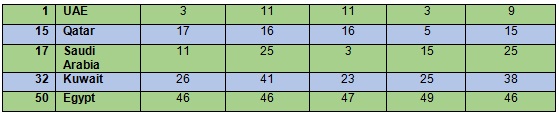
UAE tops Middle East ranking as the most attraction location for retailers, followed by Qatar, Saudi Arabia, Kuwait and Egypt
Ease of establishing a business and consumer demand continues to offer international and local retailers with a promising opportunity

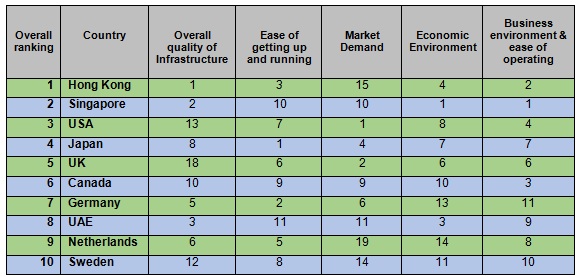
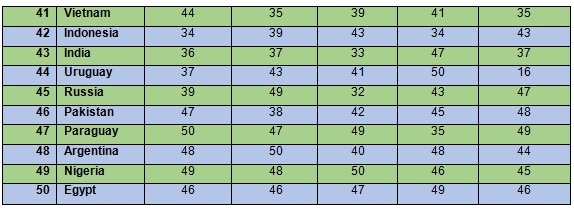
Dubai, United Arab Emirates, 15 July 2015: Retailers in the UAE experience some of the best conditions in the world in which to operate in, benefitting from a strong quality of infrastructure and a robust economic environment, says Arcadis in its Retail Operation Index. The UAE ranks eighth place in the overall rankings and first place in the Middle East, while quality of transportation and ease of getting up-and-running is holding many other countries in the region back.

The index ranks 50 international markets according to the five key factors that retailers look to when choosing where to locate their stores; these include infrastructure quality, consumer demand and ease of establishing a business in the first instance. Based on the findings, much of the UAE retail is driven by the tourist industry that further boomed in 2014 and a high calibre infrastructure in the country.

"The strategic location and physical presence of a store will continue to help successful retailers in the UAE make the greatest use of their store portfolios and brand marketing to attract customers," said Christopher Seymour, Head of Middle East Markets at Arcadis. "The quality of transportation such as roads and metros is a key factor contributing to a retailer's success as the growing young population and increased number of expats and tourists make the decision to shop based on their accessibility from direct metro links to shopping malls."


Home» News Article
Jul 15 2015
more articles from  Press Release
The UAE is one of the world's top ten most attractive markets for retailers
Google Plus
Facebook
Twitter
LinkedIn
Email A Friend
Print This Page
Save as PDF Add to Reading List Arcadis Retail Operation Index
UAE ranks eighth overall with a strong economic environment and infrastructure ranking
UAE tops Middle East ranking as the most attraction location for retailers, followed by Qatar, Saudi Arabia, Kuwait and Egypt
Ease of establishing a business and consumer demand continues to offer international and local retailers with a promising opportunity

Dubai, United Arab Emirates, 15 July 2015: Retailers in the UAE experience some of the best conditions in the world in which to operate in, benefitting from a strong quality of infrastructure and a robust economic environment, says Arcadis in its Retail Operation Index. The UAE ranks eighth place in the overall rankings and first place in the Middle East, while quality of transportation and ease of getting up-and-running is holding many other countries in the region back.

The index ranks 50 international markets according to the five key factors that retailers look to when choosing where to locate their stores; these include infrastructure quality, consumer demand and ease of establishing a business in the first instance. Based on the findings, much of the UAE retail is driven by the tourist industry that further boomed in 2014 and a high calibre infrastructure in the country.

"The strategic location and physical presence of a store will continue to help successful retailers in the UAE make the greatest use of their store portfolios and brand marketing to attract customers," said Christopher Seymour, Head of Middle East Markets at Arcadis. "The quality of transportation such as roads and metros is a key factor contributing to a retailer's success as the growing young population and increased number of expats and tourists make the decision to shop based on their accessibility from direct metro links to shopping malls."


In the UAE, a healthy performance is forecasted and consumer confidence will be boosted as a result of economic stability, which will in turn lead to more spending, higher employment and increased numbers of expats and tourists. Furthermore, in environments such as these, retailers are seeing enhancements in prevalence of foreign ownership, trade freedom and logistics performance across the UAE market, creating a more stable base for operations.
Seymour continues, "For retailers with international aspirations, weighing up where, how and when to expand into a new region, country or city is critical if they are to stay ahead of the competition and meet their business objectives. Retailers entering or optimising portfolios in the UAE need to be aware of the demographics and market demands and tailor their portfolios accordingly."

"If a business is going to operate effectively and potentially flourish, it is vital that retailers do their homework. They need to consider data and insight on their prospective markets and consider the varying factors that can impact portfolio success. For instance, a market that is expected to see strong economic growth and is ramping up on infrastructure investment has potential to improve its overall rankings in the upcoming years."
Elsewhere in the region, Qatar and Saudi Arabia rank in the second quartile, reflective of its lower ease of doing business rating and comparably less developed infrastructure. This is largely due to challenges associated with the current infrastructure programs taking place throughout the cities, as well as restrictions in regulations impacting those operating within the country.

The ten most favourable markets for retailers to operate


The ten least favourable markets for retailers to operate


The Middle East rankings for retailers to operate


Source: awok.co/PcQv21
website:www.awok.com
Post By: Ramiz Ali Khan

Thursday, July 2, 2015

Mobile phone operators research 5G technology

Although most of the world is in the early deployment stages of Long Tem Evolution (LTE), also known as 4G technology, mobile phone companies are already researching the next generation of mobile technology, 5G, according  to Ericsson’s Vice President and Head of Sales  in MENA region Tarek Saadi.

It is predicted that 85% of Middle East and Africa subscribers will be 3G/4G by 2020. (AFP Photo)

According to Ericsson’s Mobility Report 2014, there were approximately 500m mobile subscriptions to LTE, while this number is expected to globally increase to 3.1bn by 2020.

The number of mobile subscriptions is globally growing rapidly, increasing by 6.9bn in Q3 2014 alone, of which 375m can be attributed to the Middle East, according to the Mobility Report.

“One of the main reasons for the raid growth in smart phone subscriptions is that subscribers in the Middle East and Africa are exchanging their basic phones to smart phones due to lower coast of smart phones,” Saadi said.

He further added that with this rapid growth of LTE, it is predicted that 85% of Middle East and Africa will be 3G/4G by 2020. Saadi also said that LTE provides an increasing number of mobile applications, including social media apps, search engines, presence applications and content-sharing sites

While 3G is still dominant within the network space, it is being used in conjunction with 4G (LTE) by most operators in the region, Saadi added, noting that consumers appreciate the benefits of 3G and LTE networks.

“With increased mobility comes increased data use, and uninterrupted service becomes more important than ever, to the end user, who will no longer wait for a WIFI connection and generally connects through mobile data,” Saadi signaled.

Source:awok.co/39UI0i
Website: www.awok.com
Buy smartphone in UAE

“awok.com” يعتزم إطلاق التطبيق المحمول العام الجاري

الشركة تؤكد أن التسوق عبر الإنترنت طريقة آمنة وسهلة وسريعة باستخدام الهاتف الذكي.


دبي- أعلن موقع “إووك دوت كوم” “awok.com” للتسوق الإلكتروني، عن عزم الإدارة إطلاق التطبيق المحمول للمستهلكين خلال العام الجاري بقصد تسهيل الأمر في عمليات الشراء.

وشهد الموقع منذ إطلاقه نمواً قوياً، فضلاً عن زيادة طرح السلع الاستهلاكية، كما نمت الشركة بصورة واضحة جداً في الموارد البشرية عبر توظيف أكثر من 200 موظف في الإمارات.

وقال أولوغبيك يولداشيف مدير الموقع عن أن هدف موقع “إووك دوت كوم” “awok.com”هو توفير منتجات ذات جودة عالية بأسعار منخفضة باستمرار، واصفاً هذا بالإنجاز، و قائلاً “نحن نتطلع إلى تحقيق النمو في المستقبل بما يتماشى مع أهداف السنة الثالثة لدينا”، وعبر مدير الموقع عن امتنانه وشكره للعملاء مؤكداً أن جل أهداف الشركة هي تلبية احتياجات المستهلكين وفق منتجات عالية الجودة تليق بمستوى تقدم السوق الإماراتية.

وأوضح أولوغبيك يولداشيف أن التسوق عبر الإنترنت طريقة آمنة وسهلة وسريعة باستخدام الهاتف الذكي، إذ أنه من مجرد إطلاق التطبيق سيكون المتعاملين قادرين على طلب المنتج مباشرة من أجهزتهم الذكية على مدى الـ24 ساعة، مؤكداً وجود خدمة “ما بعد البيع” لضمان هدف الشركة في تحقيق 100% من رضاء المتعاملين، حيث أنه الطريق الصحيح في إنجاح أي مشروع.

إلى ذلك، كشف موقع “إووك دوت كوم” “awok.com” الإلكتروني للتسوق عبر الإنترنت، عن تقرير أعده يدرس حركة قطاع التجارة الإلكترونية في الإمارات خصوصاً و المنطقة عموماً، يتضح من خلاله أن 50% من متعاملي الموقع نفسه يتصلون به عبر هواتفهم الذكية، و عن زيادة هائلة في عدد مستخدمي الهواتف الذكية لإجراء التعاملات التجارية و الشراء والبيع عبر الإنترنت حيث ازدادت نسبة المتاعملين بـ1000% للعام الأخير، وتنسجم تلك الأرقام مع ريادة الإمارات مؤخراً للمنطقة، بعدد مستخدمي الهواتف الذكية بنسبة 78%، ما لم تكون قد تصدرت العالم بعد.

وأوضح التقرير أن الإمارات لا تزال نواصل صعودها القوي في قطاع التجارة الإلكترونية، مبيناً أن 81% من مقتني الهواتف المتحركة المتراوحة أعمارهم ما بين 16 و 34 عام يمتلكون الهواتف الذكية منها، ما يعكس حجم الزيادة في التجارة الإلكترونية في الشرق الأوسط، و مع توقعات بزيادة حجم القطاع 40% على مستوى دول الخليج بحلول عام 2020، و أن يصبح سوق الإمارات للتجارة الإلكترونية مركز لعمليات القطاع للخليج ككل، باستحواذه على حصة 53% من إجمالي تعاملات السوق الخليجي.

Source:awok.co/1ojJaw
Website: www.Awok.com

Monday, June 22, 2015

mCommerce New Megatrend in the Region

Local online retail store Awok.com reports over 50% of all traffic comes from mobile users.

UAE-based online retail store Awok.com reports that over 50% of all traffic to their e-commerce site comes from mobile users, a figure that has increased by over 1000% in the last year. With over 16 million active mobile phone subscriptions in the UAE1, it has been well publicised that the UAE has some of the highest smartphone penetration rates in the MENAP region, if not the world. Smartphone penetration rates reach over 78 percent2 and can be attributed to the fact that the UAE enjoys some of the most affordable mobile phone service rates in the world, according to a report conducted by the United Nations.

Awok.com’s results are indicative of the fact that smartphone penetration is still on the rise in the UAE, with 81 percent of mobile owners aged 16-34 now owning smartphones. These high rates of smartphone penetration, coupled with a love of all things retail means that Internet spending in the Middle East is booming, with GCC countries expecting a 40 percent growth in eCommerce by 2020. Further results from Awok.com, the online retail website report that of all sales made on the website, 45% are made on mobile phones. In the region, eCommerce sales are expected to reach $41.5 billion, one of the highest in the industry worldwide. The UAE is expected to be one of the key markets for eCommerce with a total market share of 53 percent across the GCC countries3.

“Looking at global eCommerce trends, it is obvious that online retailers in the UAE need to migrate to mobile friendly sites in order to survive. mCommerce is going to be the next megatrend in the region, and smartphone penetration rates in the UAE are a clear indictor of this. eCommerce has been on the rise for the past few years and mCommerce is fast establishing itself as a deciding factor in consumers online shopping choices,” said Ulugbek Yuldashev, Managing Director of AWOK.com.

“At Awok.com, we have ensured that our mobile site is accessible and easy to use for our customers. We are currently designing an application for our customers to download to further streamline our users journey on our site. The Awok.com application will be launched later on in 2015 and we are confident that our customers will enjoy its usability,” he added.

Insights provided by PayPal MENA and Turkey, the online payment platform, reveal that mobile is now the device of choice for payment. The shift from eCommerce to mCommerce is attributed to the rapid rates of consumer adoption of tablets and smartphones3. With global trends indicating that eCommerce is making the gradual shift to mCommerce, consumers in the UAE will need online retailers to ensure that websites are as smartphone and tablet friendly as possible.

About AWOK.com:

AWOK.com is the UAE’s leading online shopping platform. The e-commerce site is home to reliable, quality products sold at the most competitive prices. Founded by Ulugbek Yuldashev in April 2013, AWOK.com initially sold electronics and gadgets however the company has grown substantially since, now selling a wide ranging, versatile product selection including consumer electronics, health & beauty, household appliances and jewellery with new items added to the website daily.

Source: awok.co/Aywb6z
website: www.awok.com
Post By: Ramiz Ali Khan

Monday, June 15, 2015

UAE Consumers Still More Confident Of Cash On Delivery Payment For Online Purchases

In the last 12 months, UAE-based online retail specialist, awok.com, has been tracking trends in online retail habits, which clearly demonstrate that while people are comfortable with buying online, they still prefer to use cash to pay for deliveries.

Awok.com reports that on average, cyber shoppers spend AED 500 minimum per transaction, with consumer electronics taking 57% of the purchases. Home and kitchen appliances come a distant second at 14%, with photography and cameras generating the least sales at just 4%.
online shopping in UAE cod


“There is still a disconnect in trust for online purchase, versus online payment, as well as accessibility for card payment methods for some segments of society,” says Ulugbek Yuldashev, Founder and CEO of awok.com. “However, we appreciate that not everyone wants to pay through a card, and awok.com caters to all preferences.”

With the market continuing to mature quickly, males have been highlighted as the predominant force behind ‘click and buy’; representing an overwhelming 76% of online shoppers. While the UAE’s male-biased population certainly serves to ENFORCE that figure, the social aspect of malls and browsing, still appeal more to the female consumer. 25-31 year-olds make up the biggest proportion at 58%.

Awok.com has seen significant response with returning customers now hitting 59%. Mobile technology plays a big role in supporting site accessibility, with a majority of customers accessing the site through their phones and smart devices. Android users are the most predominant, at 72% of shoppers, while the optimum browsing choice is Google Chrome.

Website: www.awok.com
Post By: Ramiz Ali Khan

BlackBerry planning to launch Android smartphone with sliding keyboard

New smartphone would mark U-turn in company strategy as it struggles to stymie falling sales and moves to place software on iPhones and other Androids.

blackberry passport


The next BlackBerry smartphone could run Android and have a sliding physical keyboard, according to reports.

BlackBerry briefly showed off a slider device on stage at Mobile World Congress in Barcelona in March, but has provided little detail on it since.

The move would make BlackBerry the latest Android device manufacturer, having brought Android apps through the Amazon app store to its BlackBerry 10 smartphones in an attempt to help tempt users with more apps.

Four sources talking to Reuters said the move to use Android is part of BlackBerry’s strategy to focus on software and device management, rather than handset sales after its market SHARE declined to less than 1%.

Whether a move to Android, an about-face for the Waterloo, Ontario-based company, would spell the end of BlackBerry 10 devices is unclear. Launched in 2013, BlackBerry 10 devices have struggled to compete with Android smartphones from Samsung, Motorola or LG, or Apple’s iPhones, mainly due to a lack of big name apps.

“We don’t comment on rumours and speculation, but we remain committed to the BlackBerry 10 operating system, which provides security and productivity benefits that are unmatched,” said BlackBerry in a statement.

Software and services, not phones
BlackBerry chief executive John Chen has pinned the company’s hopes on a new device management system called BES12, which allows corporate and government clients to manage BlackBerry devices as well as devices powered by Android, iOS and Windows operating system.

One of the hurdles it faces in that transformation is convincing big customers that its device management software works across many different platforms.

Advertisement

By launching an Android-based device of its own, BlackBerry would be sending a signal to sceptics that it is confident that the BES12 system can not only manage, but also secure smartphones and tablets powered by rival operating systems.

In March, BlackBerry announced that it planned to deliver its patented security, productivity and communication tools to any mobile device running iOS, Android or Windows.

After launching its then popular BlackBerry Messaging app on Android and iPhone, BlackBerry said it plans to offer more in-house features on rival devices, including BlackBerry Hub and the predictive text capabilities of its virtual keyboard.

• BlackBerry left on the line as UK users continue to hang up

Check Blackberry phones in UAE
Website: www.awok.com
Post By: Ramiz Ali Khan.

The Most Strange Places in the World - Captured on Google Earth

The Most Strange Places in the World - Captured on Google Earth


Website: www.awok.com

Post By: Ramiz Ali Khan

Wednesday, June 10, 2015

Popular cooking appliances make meal prep easy for busy home cooks

Whether you’re the best home chef or just the busiest, everyone can use a bit of electric assistance in the kitchen. Rice cookers, steamers, slow cookers and more can cut prep time without cutting back on flavour.

“The manufacturers have given some weight to the fact that a lot of people, they don’t want to have these big oversize pieces,” says KC Lapiana, owner of In The Kitchen. “I think that the manufacturers have spent some time thinking about the profiles of the products and making them not only efficient, but a little bit smaller.”


Slow cookers, for one, are enjoying a resurgence in popularity, especially among younger consumers, says Mary Beth Brault, group manager of corporate and consumer communications at Hamilton Beach. Advancements in technology mean some models are more adaptable to your schedule, and they can be programmed to go into a “keep warm” mode to prevent overcooking.

“Slow cookers certainly picked up in momentum about five years ago when the economy started to go down,” Brault says. “The beauty of a slow cooker is that you can take a cheap piece of meat and turn it into a delicious meal.”

Lapiana recommends “multi-cookers,” which perform slow cooking, rice steaming and pressure-cooking without the hassle of three separate devices.

Rice cookers can also provide convenience for home cooks. “It’s changed in the ease of making rice and getting the right water-to-rice ratio,” Brault says. “And it really allows you to multitask better in the kitchen.” Some models double as food steamers, too.

Immersion blenders are another easy, timesaving kitchen tool ideal for soups and sauces, Lapiana says. “You don’t have to cut up everything into small pieces anymore, just roughly chop them; I’m talking the garlic and the tomatoes. Once they’re cooked through, you put in the immersion blender and it makes it all smooth.”

Source: awok.co/sAPcF5
Buy Home Appliances
Website: www.awok.com
Post By: Ramiz Ali Khan

Cash on Delivery is still king for majority of online UAE consumers

Dubai: Despite all of the talk about paperless transactions, e-commerce or innovations in the financial markets, cash is still king.
The majority of consumers in the UAE are not comfortable paying their new smartphone, perfume, toilet paper and other everyday essentials with plastic, a new study suggests.
Awok.com, an online shopping store in Dubai that sells all kinds of consumer goods, from cameras, phones to kitchen appliances, has been tracking trends in the retail habits of consumers in the UAE.
The company found that among those who buy stuff online, 85 per cent would rather pay cash on delivery, while only 15 per cent opt to use their credit or debit card.
These online shoppers, majority of whom are presumably keeping a stash of cash in their wallets at all times, are mostly men (76 per cent) and between 25 years and 34 years of age.
They spend an average of Dh500 on every purchase.
While online shopping is increasingly becoming popular, consumers in the UAE are quite not ready to fully embrace the culture of cashless payments due to security concerns.
"There is still a huge disconnect in trust for online shopping versus trust for online payment," Ulugbek Yuldashev, managing director of awok.com, told Gulf News.
"Consumers are still uncomfortable sharing their banking details online due to fear of being defrauded."
As to what they mostly shop for online, statistics showed that the most searched categories are mobile phones, tablets, watches, jewellery and perfumes.
Consumers electronics, preferred by 57 per cent of the customers, top the list of popular items,  followed by home and kitchen appliances (14 per cent), apparel and accessories (10 per cent), other categories (10 per cent), health and beauty products (5 per cent) and photography and cameras (4 per cent).
The majority of online customers (52 per cent) use their smartphones to shop, while a significant number (44 per cent) place orders through a desktop and a small number (4 per cent) through a tablet.
Payments experts have long noted the slow uptake of cashless payments not just in the UAE but in many markets around the world.
In 2009, 62.4 per cent of total consumer payments were made in cash, compared to 4.9 per cent for card transactions.
Experts had earlier attributed the trend to the low levels of investment in the payment systems infrastructure and concerns over credit card debt and security.

Source: awok.co/wW2u4D
Website: www.awok.com
Post By: Ramiz Ali Khan

Saturday, June 6, 2015

Data Shows UAE Consumers Still More Confident of Cash on Delivery Payment for Online Purchases

AWOK.com gathers data on online shopping habits for UAE consumers: Infographic 
In the last 12 months, UAE-based online retail specialist, awok.com, has been tracking trends in online retail habits, which clearly demonstrate that while people are comfortable with buying online, they still prefer to use cash to pay for deliveries.
Awok.com reports that on average, cyber shoppers spend AED 500 minimum per transaction, with consumer electronics taking 57% of the purchases. Home and kitchen appliances come a distant second at 14%, with photography and cameras generating the least sales at just 4%.
"There is still a disconnect in trust for online purchase, versus online payment, as well as accessibility for card payment methods for some segments of society," says Ulugbek Yuldashev, Founder and CEO of awok.com. "However, we appreciate that not everyone wants to pay through a card, and awok.com caters to all preferences."
With the market continuing to mature quickly, males have been highlighted as the predominant force behind 'click and buy'; representing an overwhelming 76% of online shoppers. While the UAE's male-biased population certainly serves to enforce that figure, the social aspect of malls and browsing, still appeal more to the female consumer. 25-31 year-olds make up the biggest proportion at 58%.
Awok.com has seen significant response with returning customers now hitting 59%. Mobile technology plays a big role in supporting site accessibility, with a majority of customers accessing the site through their phones and smart devices. Android users are the most predominant, at 72% of shoppers, while the optimum browsing choice is Google Chrome.
For more information on AWOK, please visit http://www.awok.com
SOURCE www.awok.com
Post By: Ramiz Ali Khan